

For the last decade businesses have slowly moved away from owning and maintaining software towards CMS solutions like Shopify, and it's easy to understand why.
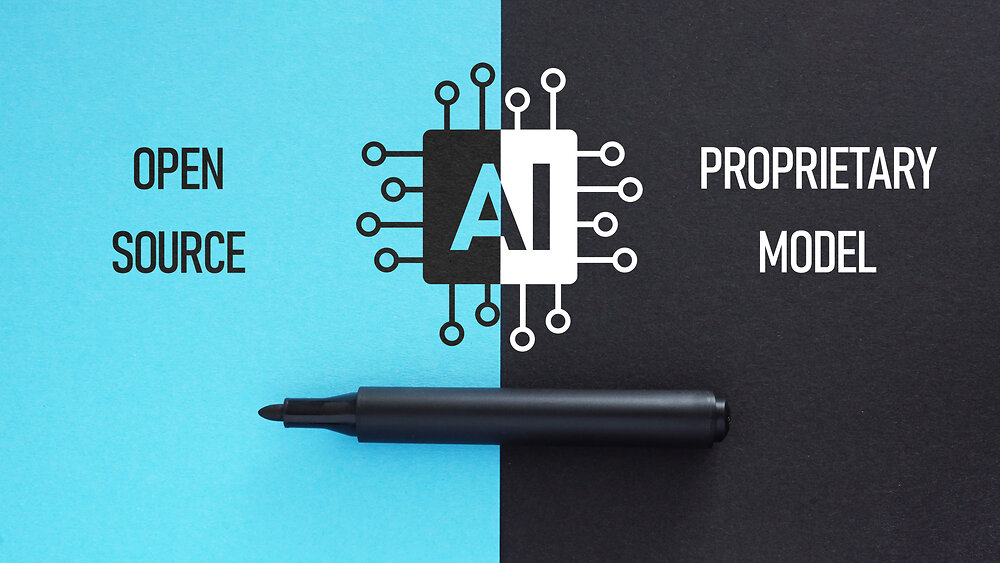
Open-source platforms give us a lot of flexibility and control, but that comes with some downsides. Development costs are high, upgrades take time, security patches need to be applied, extensions need maintenance, hosting must be managed and you need specialist developers.
SaaS offered a great alternative - you just had to pay a monthly fee and let somebody else worry about the platform complexity, while you get on with selling.
This trade-off has led to the creation of some of some extremely successful commerce platforms, but AI has started to change the economics involved. At the same time, we're nearing an even bigger change - that customers will start to interact with AI agents rather than with eCommerce websites themselves.
Put them together and the future of eCommerce could look very different from the past. Surprisingly, open source could end up being one of the biggest beneficiaries.

TLDR: What Do You Want To Know?
- The reason businesses moved away from ownership
- The app economy could face an uncomfortable question
- Open source's biggest weakness is being attacked by AI
- Open source could become more secure, not less
- There is also a question of control
- This doesn't mean Shopify disappears
- Magento could benefit, but this isn't really about Magento
- The website may stop being the centre of eCommerce
- Agentic commerce is real, but the fully autonomous version is still early
- Shopify has a major advantage in the first phase
- Open standards could eventually turn that advantage on its head
- In an agentic world, product data may become more important than the storefront
- Open source has some unique advantages in an agentic world
- The platform itself could eventually become less important
- The economics of eCommerce are changing
The Reason Businesses Moved Away from Ownership
There's nothing inherently better about renting your eCommerce platform. Businesses accepted the trade-off because it was expensive to own the technology.
Take a fairly simple piece of functionality - a merchant needs a feature available as a Shopify app for £150 a month, while having an ecommerce development team create the equivalent functionality might have cost in excess of £8,000+.
It’s not a very difficult decision - £150 per month is £1,800 per year, and it would take years before custom development became cheaper, and the app developer also being responsible for maintaining the product.
If you apply that figure across an entire eCommerce operation, the SaaS model becomes very appealing. But what happens if AI-assisted development reduces that £8,000+ development project to £1,500?
Suddenly the calculation is very different. The merchant can either pay £150 every month indefinitely for software they don't own, or they can spend £1,500 building exactly what their business requires.
The developing AI in eCommerce fundamentally changes the economics of software ownership.

The App Economy Could Face an Uncomfortable Question
Modern SaaS eCommerce stores can gather a surprising number of recurring subscriptions covering many fundamental eCommerce services the business might need, including search, reviews, product options, bundles, promotions, loyalty, returns, shipping rules, B2B functionality… the list seems to be never ending.
Singularly, many of these subscriptions are relatively easy to justify but collectively, they can end up costing thousands or tens of thousands of pounds every year to the business, and for years, the alternative was expensive custom development. Artificial Intelligence agents are rapidly reducing that cost.
If an experienced developer working with an AI coding agent can build merchant-specific functionality in a fraction of the time previously needed, continuously paying for simple software functionality starts to become much harder to justify.
There is an important distinction here, though, some SaaS products provide a genuine ongoing service like fraud detection networks, email delivery infrastructure, sophisticated search infrastructure, tax services and payment processing. All which have significant ongoing costs, so those services will continue to justify recurring fees, but AI could challenge the model of paying hundreds of pounds every month for an app with straightforward business logic.
Open Source's Biggest Weakness Is Being Attacked by AI
Open source has always had some compelling advantages - you can inspect the code, change it and choose where it runs while integrating it however you want. You aren't completely dependent on one vendor and, ultimately, you own your implementation.
The biggest problem is maintaining it - someone still has to apply security patches, upgrade dependencies, resolve compatibility issues, test releases and investigate problems. That requires skilled engineers, which makes ownership expensive.
AI is beginning to change the amount of engineering effort involved because it can already help analyse dependencies and vulnerabilities, review security advisories, prepare upgrades, resolve compatibility problems, write automated tests, investigate errors, review code and prepare pull requests.
We're not at the point where I'd recommend allowing artificial intelligence automation to maintain a critical eCommerce platform without experienced human oversight. We don't need to reach that point for the economics to change, though.
If a four-hour maintenance task becomes a 30-minute review of work largely completed by an AI agent, the lifetime cost of owning software falls dramatically.

Open Source Could Become More Secure, Not Less
Security has always been another argument for SaaS - let the platform provider worry about it.
There's obvious value in that model, and open-source software doesn't magically become secure just because its source code is publicly available. AI also gives attackers increasingly powerful tools for discovering and exploiting vulnerabilities, but defenders get those tools too.
With open-source software, the entire security community can inspect how something works. Researchers, vendors, agencies and increasingly AI security systems can analyse the same code. AI could potentially continuously analyse enormous codebases at a scale that would normally have required huge security teams.
The question therefore becomes less about whether an attacker can see the source code and more about how quickly vulnerabilities can be discovered, verified, patched and deployed.
Transparency, combined with automated analysis and professional oversight, could become an increasingly valuable security property. Closed source asks you to trust that somebody else has found the problem, but open source gives you the opportunity to verify it yourself.

There Is Also a Question of Control
When you operate on a closed SaaS platform, you're operating inside somebody else's ecosystem. For example; their policies, technical restrictions, marketplace rules and commercial decisions all apply to your business, and those things can change.
That creates platform risk for merchants and for the developers building businesses around those platforms. A merchant can spend years building its primary sales channel on a platform without ultimately controlling the platform on which that business operates.
Open source obviously works differently to that. Your hosting provider can be replaced, your payment provider can be replaced, your agency can be replaced, your search technology can be replaced. Individual components can be changed without replacing the entire business underneath them.
There is no single organisation sitting above the whole operation with control over every layer and for larger and more complex merchants, I think that idea of digital sovereignty is going to become increasingly important.

This Doesn't Mean Shopify Disappears
It would be easy to turn this argument into "AI will kill Shopify". I don't believe that, and the evidence today certainly doesn't suggest Shopify is in decline.
For millions of merchants, particularly smaller and relatively straightforward DTC businesses, SaaS commerce makes perfect sense. AI for eCommerce will make those platforms better too. Launching a simple store, in fact, has already become incredibly easy as AI generates themes, configures products, creates content, analyses performance and helps merchants operate their businesses, and for those merchants, Shopify's convenience has become even more compelling.
Things become more interesting as businesses become larger and more complicated. A B2B business with a revenue of £30m will have complex pricing, ERP integrations, complicated fulfilment processes, multiple customer types and bespoke workflows, and will obviously have very different needs from a startup selling T-shirts.
In the past, that merchant has faced a choice between accepting the constraints and ongoing costs of a SaaS ecosystem or paying considerably more to own something flexible, but that decision will change dramatically if AI reduces the second cost.

Magento Could Benefit, But This Isn't Really About Magento
As an agency with deep roots in Magento, it's tempting for us to view this purely through a Magento versus Shopify lens but I think that misses the bigger change.
Magento and other Shopify alternatives could benefit considerably. For Magento, its greatest strength has always been flexibility, while one of its greatest weaknesses has been the engineering effort required to manage that flexibility, but if AI reduces that engineering cost, the proposition becomes significantly stronger, however, AI may eventually challenge Magento too.
If software becomes cheap, and easy, enough to create and maintain, businesses will eventually ask why they need generic platforms at all. A business might only use a relatively small proportion of the functionality contained within a major eCommerce platform.
Today, recreating mature commerce functionality unnecessarily would usually be a terrible idea. In the future, that calculation may become less obvious.
Commerce architecture could become much more modular - built on a headless commerce foundation, splitting the front and back end, allowing for an open-source commerce engine, a specialist CMS, a search service, a payment provider, an ERP and merchant-specific business logic, with AI helping to build and maintain the integrations between them.
AI could finally make the concept of composable commerce economically practical for far more businesses by automating the complex API connections that headless platforms often need.
While I'm not betting on Magento winning the next decade, I am betting on merchant-owned commerce becoming much more viable.
The Website May Stop Being the Centre of eCommerce
For thirty years we've designed eCommerce around roughly the assumption that a human visits a website, searches or browses categories, filters products, visits a product page, adds something to their basket and checks out, but AI challenges that journey entirely.
Imagine saying to an AI assistant:
"I've got a 6m x 4m garden and want grey composite decking. I want something reasonably premium but my total budget is £2,500. Work out everything I need."
The eCommerce AI assistant could potentially understand the requirement, research suitable products - something we’re already seeing, calculate quantities, identify compatible accessories, compare shops, check stock and assemble the order. Eventually, you might simply approve its recommendation and let it complete the purchase, the customer may never meaningfully interact with the merchant's website.
That's the promise of agentic commerce, and if it develops as many expect, it could be a bigger change to eCommerce than the move from desktop to mobile.

Agentic Commerce Is Real, but the Fully Autonomous Version Is Still Early
There's understandably a lot of hype around agentic commerce, and some of it makes it sound as though websites are going to disappear next year but that's just not realistic.
Product discovery and recommendations are fairly straightforward, but giving an autonomous agent permission to spend somebody's money introduces much more complicated problems around identity, authorisation, payments, fraud, incorrect product information, delivery restrictions, substitutions, returns, warranties, customer service and liability when something goes wrong.
But then what happens when a genuinely complicated B2B transaction involving customer-specific pricing, credit limits, purchasing permissions, delivery restrictions and approval workflows comes along. Commerce contains vast amounts of complexity that aren't always obvious when you're looking at a product page.
I suspect we'll see a gradual transition with AI-assisted discovery already coming first, followed by increasingly sophisticated recommendations - there are currently basic recommendations already, and then simple transactions and eventually more autonomous purchasing.
It might take years before genuinely autonomous AI commerce becomes commonplace, but the infrastructure for it is already being built.

Open Standards Could Eventually Turn That Advantage On Its Head
Agentic commerce can't realistically scale if every AI platform requires a custom integration with every commerce platform and every merchant.
There needs to be a common language, and we're already beginning to see the foundations of one through initiatives such as the Universal Commerce Protocol and Agentic Commerce Protocol.
Whatever standards ultimately win, the direction is important - commerce is becoming more machine-readable and protocol-driven.
If an AI agent can interact with a merchant through an open protocol, the merchant doesn't necessarily need to run the platform that helped create that protocol.
A Magento store, or a WooCommerce store, or a Laravel commerce app could implement it - a platform that doesn't exist yet could implement it!
This brings us straight back to AI-assisted development - keeping an independent commerce platform compatible with multiple emerging standards could have meant substantial ongoing engineering work but if AI dramatically reduces that work, merchants have much more freedom.
If one AI ecosystem needs a new capability, implement it and if another standard becomes dominant, support it. The merchant can own the underlying system while staying free to connect it to whichever channels become important.
Shopify may therefore have an enormous advantage in phase one of agentic commerce through aggregation and convenience. Having said that, open architecture could be extremely well positioned for phase two, when standards make those connections universal.

Shopify Has a Major Advantage in the First Phase
Shopify is extremely well positioned for the first generation of agentic commerce because it already has access to enormous numbers of merchants, products, eCommerce insights, and transactions. Its work around Agentic Storefronts, Shopify Catalogues and emerging commerce protocols demonstrates how valuable that scale could become.
Instead of an individual merchant worrying about how to integrate with ChatGPT, Gemini, Copilot and whatever comes next, Shopify already has the infrastructure to potentially handle much of that complexity centrally. Millions of merchants can benefit from integrations developed once at platform level.
Convenience has always been one of Shopify's greatest strengths, and agentic commerce could initially make that advantage even stronger.
In an Agentic World, Product Data May Become More Important Than the Storefront
If a customer asks an AI what to buy rather than manually browsing websites, the AI needs to understand general eCommerce trends, product information, specifications, compatibility, price, availability, delivery, returns, reviews, documentation, and expert content. That beautiful category page that took six weeks to design may never be seen.
The quality and accessibility of the merchant's underlying commerce data therefore becomes enormously important. Businesses will increasingly need to think about two audiences - humans and machines.
SEO doesn't disappear either, though, it evolves - again. For years, merchants have asked "How do we rank first on Google for composite decking?" but in the future they'll also ask "How do we make sure an AI recommends our decking when somebody describes the project they're trying to complete?"
That creates an entirely new optimisation discipline around structured product knowledge, authority, potential demand prediction, machine-readable content and agent accessibility.

Open Source Has Some Unique Advantages in an Agentic World
Agentic commerce isn't automatically an argument for open source, though, and there are some significant disadvantages.
A Shopify merchant may get access to a new AI commerce channel through a setting in their admin, but an independent open-source merchant may need an integration built, tested, secured and maintained.
A large SaaS platform can also solve authentication, payments, fraud and attribution consistently across huge numbers of transactions. An independent implementation has to make sure those things are done correctly. These are genuine advantages.
Open source offers something different, though, it offers control over how agents interact with the business. A merchant can decide exactly what data is exposed, which actions agents can perform, which products are available, how customer-specific pricing works, what permissions apply, which payment providers are used and how agent transactions interact with its ERP.
When new capabilities appear, the merchant doesn't necessarily have to wait for a platform vendor to decide whether or how to support them. For sophisticated merchants with unique business models, that flexibility could be incredibly valuable.
The Platform Itself Could Eventually Become Less Important
Put all of this together and you arrive at a slightly uncomfortable conclusion for almost every eCommerce platform - what happens if AI simultaneously makes custom software dramatically cheaper and makes the traditional storefront less important?
The underlying platform becomes less visible. The customer doesn't particularly care whether an order is processed by Magento, Shopify, Laravel or something completely different. The AI agent probably doesn't care either, provided the merchant exposes the capabilities it requires.
What matters is whether the merchant has the right product, whether the information is accurate, whether the price is competitive, whether it's compatible with what the customer needs, whether it can be delivered and whether the transaction can be completed securely.
The eCommerce platform basically becomes plumbing, important plumbing like all other plumbing, certainly, but plumbing nonetheless.

The Economics of eCommerce Are Changing
For the last decade, one of the strongest arguments for SaaS has effectively been that you don't want the cost and complexity of owning this technology yourself and AI is attacking both parts of that sentence.
Development, maintenance, testing, security analysis and integration are all becoming cheaper. Custom software is becoming economically viable in situations where a subscription would have been the obvious answer.
At the same time, open commerce standards could make it easier for independently owned platforms to participate in an emerging agentic economy.
None of this means everything should suddenly become custom. It doesn't mean SaaS platforms are going anywhere soon, and it certainly doesn't mean Shopify is about to disappear. Shopify may actually be one of the biggest winners from the first wave of agentic commerce, but businesses should start questioning some of the assumptions that have driven technology decisions for the last decade.
If owning your technology no longer carries the enormous engineering premium it once did, then ownership becomes considerably more attractive. If customers increasingly interact with merchants through open protocols rather than websites, then being locked into one platform may become less important to reaching those customers.
The future of eCommerce may look surprisingly different from its recent past, with more open standards, more merchant-owned technology, more bespoke functionality, less unnecessary software rent, less platform dependency and potentially much, much more competition.
AI was supposed to threaten open-source development by making developers less important, but it may remove the very disadvantages that pushed businesses away from open source in the first place, just as agentic commerce makes open access to the underlying business more important than ever.

How Envisage Digital Fits Into the Picture
At Envisage Digital, we see these economic shifts as an enormous opportunity for our clients. As an eCommerce development agency specialising in Magento, as well as being a Hyvä gold partner, our focus is on helping you navigate the choice between SaaS convenience and open-source control. We give merchants the technical capability and practical oversight needed to build, maintain, and scale complex online stores without getting locked into restrictive software ecosystems.
Whether you need to replace expensive third-party subscriptions with custom business logic, streamline complex B2B workflows, or structure your product catalog so future AI buyers can actually interact with it, we help you make the right architectural decisions. By keeping the lifetime cost of platform ownership manageable, Envisage Digital enables ambitious brands to retain complete control over their digital infrastructure, their customer data, and their long-term growth.

Ready to talk?
Whether you're looking for advice, a site redesign or upgrade, improved Core Web Vitals, or some marketing assistance, our team of experts is here to help.